Showing posts with label Cameras. Show all posts

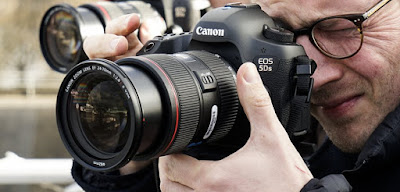
New Canon EOS 5DS R Digital Camera Performa and Features

The EOS 5DS R has a 50.6MP full-frame CMOS sensor powered by two Digic 6 processors. This lets the camera capture 8,688 x 5,792-pixel files at a very respectable 5 frames per second, just like the Sony A7R Mark II. The 50.6MP chip is the most pixels you can get in a DSLR or mirrorless camera, as of this writing.

Having used both the 5DS and 5DS R for a few months, we thought we would be familiar with using them. But we only just scratched the surface of their capabilities, and it will require months of experimenting to become familiar with all the menu options, such as the Fine Detail mode in the Picture Styles menu that gives access to Sharpness sub-settings. We’re sure studio photographers will have a ball with this, but since we’re not studio shutterbugs, all of our shots were handheld.

Best Canon EOS 5DS R review 2016
Canon EOS 5DS R

Unlike Canon’s ultra-high-end pro DSLR, such as the $5,300 EOS-1D X, the 5DS R has a Smart Auto. Normally you would find this on entry- and mid-level DSLRs, so it’s surprising that Canon would put it on here. With that said, we have seen experienced photographers use this mode in situations where they just want to quickly capture a fleeting moment. There are also three custom options available on the dial, as well as a Bulb mode (used for long exposure).

The 5DS R has a native ISO range of 100-6,400 but you can hit 50 and 12,800 via expansion settings. The camera is an excellent low-light performer and our sample subject held up very well to ISO 3,200, and even 12,800 was usable. The built-in optical image stabilization of the zoom did a fine job keeping things steady and sharp.

You’ll find the hot shoe on the top deck, with a locking mode dial and on/off switch on one side, and on the other side, buttons for White Balance/Metering, Drive/AF type, Exposure Compensation/ISO, and lamp (for illuminating the mono LCD that shows shooting parameters). Toward the top of the grip are a jog wheel, an AF-area selection/Multi-function key, and an angled shutter button. Like other high-end Canon DSLRs, you won’t find a built-in flash. The two dominant features on the back are the large optical viewfinder with diopter control and 3.2-inch fixed-position LCD display (rated 1.04 million dots). The viewfinder offers 100-percent coverage with .71x magnification, and it’s excellent. The LCD, on the other hand, is adequate but not world class; studio photographers would attach laptops or monitors as their view screens anyway.

There are a lot of buttons on the back. To left of the LCD are Delete, Playback, Enlarge/Reduce, Rate, and Creative Photo/Two-Image Display (the latter functions are geared toward pros). Nearby are Menu and Info buttons; Live View Control for stills/video, as well as a center start/stop for recording; and AF-ON, AE Lock, and AF point selection. Given the camera has a 61-point AF system (41 cross-type), you can choose among any of them by using the joystick or jog wheel. We liked that the joystick is raised and easy to control. The nearby Q (Quick) key gives access to the available parameters, plus there’s a large control wheel with center Set button. Finally there’s a Multifunction Lock switch that prevents inadvertent camera adjustments. On the right side is a compartment for two cards, CompactFlash and SD. The CF slot accepts Type-1/UDMA-rated media, and all SD cards can be used including SDXC. Although Canon doesn’t recommend the fastest cards available, we suggest you get one to speed the flow of 50.6MP files. The camera also supports USB 3.0 for faster file transfers.

LV-KDV2404W1 – 960H 2 Series Security System Cameras Review, Specs and Price

High Definition Viewing : View your cameras in high definition 1080p resolution. This 960H DVR offers higher resolution than D1 in both realtime recording, viewing, and playback.
Superior 1.3 MP Image Quality : The highest resolution in analog, 1.3MP gives you superior life like resolution with up to 100 feet of night vision.

LV-KDV2404W1 Features :
  • Wide Screen HD 960H Security System
  • 960H H.264 Dual-Stream Video Compression
  • 4 Channel Realtime Recording and Playback 
  • Powerful User-Friendly Interface and mobile APPs
  • Motion Detection and Email Alert Notifications
  • 3.6mm Fixed Lens for Indoor or Outdoor Use
  • Night Vision up to 100 feet
  • Wide Operating Temperature Range: – 40°F to +140°F ( – 40°C to 60°C)
  • Live View & Playback on Smartphones & Mobile Devices
  • Super Quiet with Stylish Look and Feel
  • Cameras have achieved UL Listed status in the US and Canada 

Price Range :  $169.99

Samsung NX1000 20.3 Megapixel Digital Compact System Camera Review, Specs and Price

Design and options

The body of the NX1000 is sort of like the NX200, however it is not identical. it is the same height because the older model, however somewhat narrower and somewhat agent, though it's precisely the same weight - a astonishingly light-weight 271g minus the lens. The shape, too, is slightly totally different, with the lens positioned more to the left of the body deed additional space for the user's fingers between the lens barrel and therefore the handle. The handle has lost the rubber grip pad on the front, however it's still quite snug and secure to carry, and incorporates a thumb grip space on the rear. the general build quality is nice, however the light-weight body is created largely of plastic and will creak a trifle if given a decent squeeze. The kit lens conjointly incorporates a plastic barrel, and feels Very light and insubstantial.

One feature that distinguishes the NX1000 from the remainder of the NX vary is that the monitor. the 2 dearer models get Samsung's acclaimed AMOLED screen, however the NX1000 has got to accept a seven.6cm (3in) TFT digital display. It's no handicap though; the screen is bright, sharp and clear, with wonderful distinction, a quick refresh rate, a particularly wide viewing angle and a moderately effective anti-glare surface. The management layout is additionally terribly like the NX200, however once more with slight changes. it's a similar multi-function D-pad with a rotary edge, that is employed to regulate most of the camera's functions, and navigate through each a main menu and a graphical operate menu for fast settings. Main mode choice is via an outsized dial on the highest plate. like the opposite NX models the NX1000 incorporates a full vary of exposure choices, as well as program automobile, aperture and shutter priority and full manual exposure. in addition as these, it's multiple scene modes and good scene choice. The button layout could be a very little totally different, with exposure compensation shifted onto the D-pad and ISO setting adjustment done via the operate menu. the foremost obvious distinction tho' is that the addition of the "Smart Link" button on the highest plate.

The NX1000 is that the latest of the many cameras to incorporate intrinsical Wi-Fi property, which may be accustomed share photos via email. It's fairly simple to use, and no more durable to line up than connecting a smartphone to a Wi-Fi network. The good Link operate is fairly fast and straightforward to use. you'll be able to make a choice from a listing of in-range Wi-Fi signals, enter the countersign if needed, then enter your name and optionally a "from" email address. Add a recipient's email address, select that photos you need to send, and off they're going. photos square measure reduced in size to a pair of.1 megapixels and compressed right down to around 44KB for transmission, that clearly reduces overall quality, thus if you wish to share top quality photos you'll need to attend till you'll be able to transfer onto a computer, however as some way of quickly sharing a photo it's actually quicker than causing a post card.

The NX1000 offers alternative Wi-Fi options too. choosing "Wi-Fi" on the most mode dial results in a menu of choices, as well as Remote view finder and MobileLink, each of that square measure meant to figure with free smartphone apps downloaded from Google Play or Apple App Store. I put in each the Remote view finder and MobileLink apps on my HTC Sensation, a reasonably recent high-spec mechanical man smartphone, and connected the NX1000 to my home Wi-Fi network, however despite continual tries i could not get either one to speak with the camera. to create matters worse each apps unbroken disabling my phone's Wi-Fi association, even going thus far on reset the network countersign. i feel the matter here is with the apps, not the camera. i do not have associate iPhone to check the iOS versions, however the mechanical man versions clearly would like some pressing attention.

The other Wi-Fi choices, as well as direct posting to Facebook, Picasa, YouTube or Photobucket, all work dead well, and there also are choices to remotely transfer your photos to your computer or the Microsoft SkyDrive cloud storage service. I've antecedently expressed that i do not think about Wi-Fi property to be abundant of a point for a camera. I've ne'er nevertheless seen such a feature that works swimmingly, and therefore the NX1000 has done very little to alter my opinion. I suppose the flexibility to instantly post your photos on social media sites can be appealing to some, however it's extremely not one thing i would pay further for. One feature that's definitely worth the money is that the NX1000's wonderful recording mode. It records fully HD one,920 x 1,080 at 30fps with stereo audio, and offers skilled options like manual exposure choices in video mode, image Wizard scene effects, voice recording and additional. The video and audio quality square measure wonderful, though the intrinsical microphones square measure rather susceptible to wind noise.

Performance

The NX1000's overall performance is incredibly smart. It will begin and take an image in or so a pair of.5 seconds, and in single shot mode the shot-to-shot time is or so one.6 seconds, that is approaching DSLR speed. Like all CSCs the NX1000 uses distinction detection optical device, however Samsung's multi-point AF is incredibly fast and correct, and even works well with moving subjects, though like the NX200 is will prevent plenty in low light-weight. The NX1000 has many burst and continuous shooting modes, the quickest of which may shoot at 8fps in each JPEG and Raw modes for up to eight shots.

The NX1000 has no intrinsical flash, however there's alittle attachable flash accessible either as associate nonobligatory further or as a bundled accent with the SEF8A kit seen here. it is a neat very little unit and matches the camera well, however it's to be same it is not notably powerful, with a guide variety of solely eight at a hundred ISO. Most life-size accent flashguns square measure 3 or fourfold as powerful. It will a minimum of provide a full vary of flash mode choices, as well as 1st or second curtain synchronize.

Samsung NX1000 Digital Camera Specifications
  • Manufacturer and Model : Samsung NX1000
  • Image sensor : APS-C CMOS, 23.5 x 15.7mm
  • Max. resolution : 20.3-megapixels
  • Zoom : By lens
  • Focal length (35mm) : By lens
  • Maximum aperture : By lens
  • Shutter speeds : 30 sec - 1/4000th
  • Auto-Focus : Contrast detection
  • Manual focus : Yes
  • Exposure control : PASM, Smart Auto, Scene modes
  • Exposure metering : TTL multi-zone, C/W, spot
  • Image stabilisation : Optical stabilisation on some NX lenses
  • ISO range : 100 - 12800
  • LCD monitor : 7.6cm (3in) TFT LCD, 921k dots
  • Viewfinder : N/A
  • Flash : (Optional accessory) GN 8 at 100 ISO
  • Drive modes : Single, continuous (3 or 8fps), burst mode
  • Image formats : JPEG, Raw
  • Video : 1,920 x 1,080 HD, stereo audio, H.264
  • Memory card slot : SD/SDHC/SDXC
  • Supplied memory : N/A
  • Battery : 1030mAh li-ion, 320 shots (CIPA)
  • Ports : USB 2.0, Mini HDMI
  • Dimensions (W x H x D) : 114 x 62.5 x 35mm not inc. lens
  • Weight (body only) : 271g inc. battery & card, no lens.
  • Accessories : Neck strap, lens cap, flash gun, software disk
  • Software : Intelli-studio 3.0, Samsung RAW Converter 4
  • Warranty : 12 months
Price Range : £499

Panasonic HC-V700 Full HD Camcorder Review

Performance

The HC-V700 uses a 1/2.33in MOS sensing element with a 21x optical camera lens that covers a 28-717.4mm (35mm equivalent) focal vary. The wide angle lens is sweet for capturing larger scenes in tight quarters, and also the zoom is longer than the 10x reach found on some competitors, however almost as spectacular because the 25x zoom found on the Sony HDR-PJ200. The lens reveal to f/1.8 aperture at the wide finish and f/3.5 at its pic reach. It allows the number of sunshine because the Everio GZ-GX1, with its f/1.2 aperture, however the HC-V700 surpasses that camera in low lightweight situations.

Both inside and out, the HC-V700 delivers extremely crisp video. In low lightweight tests, the HC-V700 was able to maintain fine details, even in some darker shadows. There was just about no image noise evident and hues were typically faithful life. I did notice some instances of inaccurate or slow white balance, which might provide video a yellow tint. Outdoor footage was equally sharp, with spirited colors and correct exposure. Shooting in 1080p60 made sleek and fluid action, with little blurring or loss of detail. I detected delicate color fringing outdoors, with purple edges on objects with bright backgrounds, however it absolutely was less pronounced and fewer frequent than the fringing that popped up with the GZ-GX1. the video quality was systematically sharp and sleek.

Image stabilisation is extremely smart, even at the pic extreme. Zooming in and panning across scenes is sleek, with terribly delicate and unobtrusive  shakes. There was occasional lag before fast pan shots, however it wasn't too flagrant and positively preferred to a shaky shot. Audio quality was additionally smart in my tests – the V700 was able to obtain voices loud and clear, however outdoors the camera additionally picked up lots of environmental noise like cars driving by or rustling of trees. Still image quality, like most alternative camcorders, leaves one thing to be desired. Image noise is usually unbroken low, however a persistent roughness muddies some finer details, even in smart lightweight.

Do note that the V700 records in AVCHD solely. confine mind that some written material programs, like iMovie, don't support AVCHD at 1080p60, thus you'll have to convert your videos consequently. The camera includes a single card slot that accepts South Dakota, SDHC, and SDXC memory cards. The mini HDMI port permits for playback on HDTVs, and also the mini USB port facilitates file transfers between camera and pc. The V700 lacks any Wi-Fi property, that is enclosed on the likes of the JVC GZ-GX1. AN enclosed AC adapter charges the removable battery.


Design and options

There isn't a lot of deviance in client camera style of late, with the acquainted barrel-like form, handgrip, and swing liquid crystal display, that square measure all found on the HC-V700. At sixty nine x 119 x 56mm (WxDxH) and 270 grams, the Panasonic HC-V700 sounds like most alternative camcorders in its category.

Button placement is additionally fairly commonplace, with the zoom rocker and still image shutter on high, and also the Record button on the rear, wherever your thumb naturally sits. To the left of the zoom rocker is AN Auto/Manual button and Image Stabilisation button. To the correct could be a slider to vary between Video, Photo, and Playback modes. within the liquid crystal display recess square measure mini USB, mini HDMI, and Jewish calendar month out ports, furthermore as a three.5mm mike input, power button, and 1080i60/p60 toggle button.

The 3in liquid crystal display, that includes a 460k-dot resolution, is sharp and bright enough for out of doors use. It’s actually a way higher quality affair than found on some camcorders, though it isn’t up there with the 921k-dot resolution of the JVC Everio GZ-GX1. The liquid crystal display is touch-enabled, and menu navigation is responsive. Full automobile mode is quick and correct, thus you most likely will not have to be compelled to penetrate the menu for finer changes. Manual mode puts focus, white balance, shutter speed, and iris changes among straightforward reach, however dynamic  video quality and a few alternative options needs excavation deeper into commonplace list menus.


Price Range : £390

panasonic.co.uk

Pentax Optio WG-2 Digital Camera Review, Specs and Price

Performance

While the WG-2 is also designed to accompany you on your adventures, it will thus at its own pace. It starts up in concerning 3.5 seconds, that may be a bit on the slow facet, and in single shot mode its shot-to-shot time is around a pair of. 7 seconds, that is pretty sluggish by current standards. the most reason for the delay is that the AF system, that is incredibly slow, taking a couple of second to focus even in bright daylight. there's never-ending shooting mode, which may shoot ten frames at simply over one frame a second, however it then takes many seconds to empty the buffer before you'll be able to take another image. The speed of your memory card can facilitate here; a category ten card clears the buffer in concerning eight seconds, a slower category six card takes concerning twelve seconds.

The WG-2 includes a sensible flick mode, shooting full HD one,920 x 1,080 resolution 30fps clips of up to twenty five minutes period. Audio is mono solely, recorded by one aboard mike, however the standard is amazingly sensible. Like most cameras the mike is not notably directional, and it will suffer quite badly from wind noise in something stronger than a lightweight breeze. As usual, optical zoom can not be used whereas recording video.

Battery period within reason sensible. The WG-2 is steam-powered by an equivalent 925mAh li-ion battery found altogether of Pentax's compacts, and it will run the camera for about 260 shots. there's another version of this camera with a intrinsical GPS feature, which too is steam-powered by an equivalent battery. GPS systems ar notoriously power-hungry, thus i believe that battery period goes to be a giant drawback for the GPS version. For this non-GPS version, 260 shots is not specifically plenty, however I've seen worse.

Design and Options

The WG-2 is definitely a particular wanting camera. it's a rugged art movement body form that would not look out of place on the set of a sci-fi flick, with voluminous lines and ridges and oddly rough  panels. In common with most of its contemporaries the planning options exposed bolt heads, that i am moderately certain ar strictly cosmetic. there is extremely no reason why journey cameras need to be titled during this way; Sony has incontestible that it's absolutely doable to create a water-resistant compact camera that appears even as trendy and stylish as a traditional camera, and most of Pentax's previous waterproof models have looked less like military hardware. a minimum of the camera's uncommon form and rather extraordinary style will build it easier to carry firmly, though that heavy-duty  strap and ring do get within the method a trifle.

There's no disputing the WG-2's toughness. Pentax claims it's waterproof to twelve metres, ready to face up to drops of up to one.5 metres and survive crushing force of up to 100kg. It conjointly claims it's ready to face up to cold temperatures all the way down to minus ten centigrade, however as I've detected before, most digital cameras will operate at that kind of temperature while not a haul. It's definitely a ruggedly designed camera, however not like the Panasonic FT4 and Mt. Olympus TG-1, Pentax has opted for a largely plastic body. this does not extremely save abundant weight; the WG-2 is barely a few of grams lighter than the FT2, however with the addition of rubberised bumpers on the projected ends it will mean that the camera bounces quite well. do not tell Pentax, however I did strive dropping it from concerning head height onto a tough wood floor, and it survived utterly unharmed.

The WG-2 will have one terribly uncommon feature. round the lens may be a ring of six white diode lights, and therefore the camera will focus all the way down to around 1cm from the lens. The LEDs ar wont to illuminate close-range subjects in what Pentax has dubbed "microscope mode". It will work very well, manufacturing clear, sharp and equally lit footage of tiny objects at terribly shut vary. however helpful this can be can rely upon wherever you always take photos. For a naturalist keen on insect life I imagine it'd prove priceless.

Apart from its huskiness which distinctive magnifier mode, the WG-2 may be a fairly normal compact camera, with a specification broadly speaking almost like Pentax's Optio LS465. it's a 1/2.3in 16-megapixel back-illuminated (BSI) CMOS sensing element, a 5x telephoto lens akin to around 28-140mm, and a 7.6cm (3.0in) monitor. Pentax claims that the screen has Associate in Nursing "anti-reflection coating", however I've seen mirrors with lower reflectivity.

The management layout is additionally terribly almost like a traditional compact camera, though the buttons themselves ar excitingly chunky to match the body. Like Pentax's different compacts the WG-2 is totally automatic, with a variety of shooting modes accessed, not too amazingly, via the "Mode" button on the D-pad. it's a helpful choice of motorcar modes, together with some uncommon ones like hand-held night snap, that tries to combat low-light camera shake by taking 3 footage in fast succession and compositing them along. different modes embody underwater still and flick settings, in addition because the usual landscape, portrait, surf & snow, pets, kids etc. whereas the management interface is okay for many casual snapping, if you wish to stray from the totally automatic path it is a bit a lot of sophisticated. Settings like exposure compensation, ISO and white balance ar relegated to the second page of the most menu, thus dynamical either of them needs plenty of tedious scrolling and clicking. luckily like most Pentax compacts it's doable to re-purpose the inexperienced button as a customisable perform button, that makes life somewhat easier.

Pentax Optio WG-2 Cameras Specification :
  • Manufacturer and model : Pentax Optio WG-2
  • Image detector : 1/2.3in CMOS, 16.79MP total
  • Max. resolution : four,608 x 3,456, 16.0MP
  • Zoom : 5x optical, 7.2x digital
  • Focal length (35mm) : five - 25mm (28 - 140mm equiv.)
  • Maximum aperture : f/4.8-5.8
  • Shutter speeds : four - 1/4000th
  • Auto-Focus : TTL distinction detection
  • Manual focus : N/A
  • Exposure management : Program automobile
  • Exposure metering : Multi-segment, Centre-weighted, Spot
  • Image stabilisation : Digital solely
  • ISO vary : a hundred twenty five - 6400
  • LCD monitor : seven.6cm (3.0in)
  • Viewfinder : N/A
  • Flash : Wide zero.2 - 5.5m, Tele 0.2 - 3.5m (ISO Auto)
  • Drive modes : Single, continuous, continuous high-speed
  • Image formats : JPEG
  • Video : 1080p 30fps, mono audio, 25 mins
  • Memory card slot : SD/SDXC/SDHC
  • Supplied memory : eighty eight.2MB intrinsic
  • Battery : 925mAh li-ion reversible
  • Ports : USB a pair of.0, HDMI Micro
  • Dimensions (W x H x D) : 122.5 x 61.5 x 29.5mm
  • Weight (body only) : 194g opposition battery and card
  • Accessories : Macro stand ring, strap, karabiner, manual, cables, charger
  • Software : MediaImpression three.5
  • Warranty : twelve months
Price Range : £224

pentax.co.uk

Samsung MV800 Digital Camera Review, Specs and Price

The MV800 is unquestionably a fun camera to use, and at the price it would make a good gift for a teen. The clever fold-up monitor and the range of amusing filters and effects are ideal for those who would otherwise take pictures with their mobile phones, but if you're looking for a camera to take good quality pictures, or to use in difficult conditions then you should really look elsewhere. The poor battery life is a major drawback, and that touchscreen interface really doesn't add anything that a menu and D-pad couldn't do quicker and better.

Samsung MV800 Digital Camera Specification :
  • Image sensor : 1/2.3in CCD, 16.15 megapixels
  • Max. resolution : 4,608 x 3,456 pixels
  • Zoom : 5x optical, 5x digital
  • Focal length (35mm) : 26-130mm (35mm equiv.)
  • Maximum aperture : f/3.3 - f/5.9
  • Shutter speeds : 16 - 1/2000sec
  • Auto-Focus : TTL contrast detection
  • ISO range : 80 - 3200
  • LCD monitor : 7.62mm (3.0in) 288,000 dots
  • Flash : Wide: 0.2 - 3.2m, Tele: 0.5 - 1.8m (ISO Auto)
  • Drive modes : Single shot only
  • Image formats : JPEG
  • Video : 1,280 x 720, 30fps, 20mins.
  • Memory card slot : microSD
  • Supplied memory : Approx. 10MB internal
  • Battery : 740mAh li-ion
  • Ports : USB 2.0 hi-speed, Mini HDMI
  • Dimensions (W x H x D) : 92.1 x 56.2 x 21.9mm
  • Weight (body only) : 141g inc. battery and card
  • Accessories : Cables, battery charger
  • Software : Built-in PC suite
  • Warranty : 12 months

Performance

As I mentioned the MV800 shares most of its features with a low-end budget compact, and that goes for the performance as well. It's not really bad though, just...average. It starts up in approximately three seconds, and has a shot-to-shot time of approximately 1.8 seconds, which isn't too bad at all. However, it has no continuous shooting or burst mode, so that's as fast as it'll go.

The autofocus system is also average for the class. It works very well in good light, focusing in about half a second under most circumstances, and in low light it has a good AF assist lamp with a range of about three metres, which is also roughly the effective range of the flash. At longer ranges it does struggle in low light, but that's not really what it was designed for.

One major concern is battery life. The MV800 is powered by a rather small 740mAh lithium-ion rechargeable battery, which has to power that big screen and touch-sensing electronics. Samsung makes no particular claims for the battery duration, but in my testing, which consisted of using it over a couple of weeks to take snapshots, many with flash, and shoot some short video clips, I found it would only take about 120 shots on a full charge, which is pretty disappointing performance .

Features

Articulated monitors are nothing new. Many high-spec compacts, super-zooms and DSLRs have had this feature for several years, but this is the first time I can recall seeing one on a camera this small. The MV800 is a true pocket compact, measuring 92.1 x 56.2 x 21.9mm and weighing just 141g including battery and memory card, small and light enough to slip into a shirt pocket or purse. It's not the slimmest camera on the market (that's still the Casio EX-S10) but it's within a few millimetres, which makes the engineering of that folding monitor even more impressive. It's a decent sized monitor too, with a 3in TFT LCD screen and 288,000 dots. The screen doesn't just fold; it's also touch-sensitive and forms the camera's main control interface. Apart from the on/off and shutter buttons the MV800 has only two other buttons - a "home" button to bring up the main mode menu, and a playback button to review your pictures. The zoom control is a rotary bezel around the shutter button.

The main mode screen on the MV800 is clearly influenced by smartphone design, with the various shooting modes represented by square icons that look a lot like the app icons on a phone screen, and it even has a choice of wallpaper. Like a smartphone you can swipe through several pages of options, but most of them are fairly frivolous, with things like "magic frames", funny face effects, the apparently now obligatory photo effect filters including miniature photo and retro camera, and a synthesised stereoscopic 3D mode, which of course you'll need a Samsung 3D TV to appreciate. There are more useful options such as background blur, night shot, close-up and an automatic portrait zoom function, as well as themed albums and basic in-camera photo editing in playback mode, but on the whole the MV800 is clearly designed more for entertainment than it is for photography.

Apart from its touchscreen interface and fun features the MV800 is a fairly basic compact camera, sharing most of the components of the lacklustre Samsung ST93, which is available for around £90. It has a 16.1-megapixel sensor, a 5x zoom lens equivalent to 26-130mm, and can shoot 720p video in 20-minute clips, with optical zoom available while recording, although both the zoom motor and the click of the zoom control are audible on the mono soundtrack. It has both optical and digital image stabilisation that appears to work reasonably well, and multi-point, spot or centre-weighted metering. ISO sensitivity ranges from 80 ISO to 3200 ISO, but as we'll see later that's not something to get excited about. Like a lot of Samsung's line-up, the MV800 is a fairly cheap camera, although the price does vary wildly depending on where you shop. Most of the reputable camera shops seem to be selling it for around £149.99, but I've seen it for as little as £106 and as much as £199.99, so do look around.

Price : £149.99

Panasonic Lumix DMC-FT4 Digital Camera Review, Specs and Price

The Panasonic Lumix DMC-FT4 is an amazingly rugged camera that can take pictures and video under conditions that would destroy any normal compact. It can dive deeper and fall higher than almost all of its competition, and still manages to retain most of the performance, photographic quality and versatility of its land-based brand-mates. It has, in theory at least, some very useful features for the adventuring photographer, however in practice they are less useful than they might appear. The GPS system is unreliable at best, and drains the battery very quickly. It'll spend most of its time switched off, which brings into question why one would pay extra for something that is going to see little use. Other than that though, the FT4 is a great little camera for anyone into active outdoor sports.

Panasonic Lumix DMC-FT4 Camera Specification :
  •  Image sensor : 1/2.33-type CCD sensor / 12.5-megapixels (total)
  • Max. resolution : 4,000 x 3,000 pixels
  • Zoom : 4.6x optical, 4x digital
  • Focal length (35mm) : 4.9 - 22.8mm (28 - 128mm in 35mm equiv.)
  • Maximum aperture : F3.3 - 5.9
  • Shutter speeds : 60 - 1/1300 sec
  • Auto-Focus : Contrast detection
  • Manual focus : N/A
  • Exposure control : Program AE, manual (min/max aperture)
  • Exposure metering : Intelligent multiple zone
  • Image stabilisation : Power OIS (optical stabilisation)
  • ISO range : 100-1600 (HS mode 1600-6400)
  • LCD monitor : 6.7cm (2.7in) TFT  LCD, 230K dots
  • Flash : 0.3 - 5.6m Wide, 0.3 - 3.1m Tele, ISO Auto
  • Drive modes : Single, burst, continuous (at 2MP)
  • Image formats : JPEG
  • Video : Full HD 1080 50i, MP4/AVCHD
  • Memory card slot : SD/SDHC/SDXC
  • Supplied memory : Approx 20MB
  • Battery : 940mAh Li-ion rechargeable
  • Ports : Micro HDMI, AV output, USB 2.0
  • Dimensions (W x H x D) : 103.5 x 64.0 x 26.5 mm
  • Weight (body only) : Approx. 197g with battery and SD memory card
  • Accessories : Wrist strap, manual, software CD
  • Software : PHOTOfunSTUDIO 8.1 Advanced Edition
  • Warranty : 12 months

Performance

Apart from the lacklustre GPS feature, the FT4 performs extremely well. The start-up time is a little slow at five seconds, surprising for an internal-lens camera, but the shot-to-shot time in single shot mode is approximately 1.1 seconds, which is nice and quick. The FT4 has two continuous shooting modes, a full-resolution burst mode that can shoot six frames in approximately two seconds, and a high-speed continuous mode that can rattle along at 10fps for up to 100 frames, but only at 2MP resolution.

The autofocus system is very good, focusing quickly and accurately even in dim light or with moving subjects. Unfortunately, I didn't have the opportunity to test it underwater, but I've seen well-focused submerged shots taken with it. Panasonic's Power OIS stabilisation system has repeatedly proven itself to be extremely effective, and managed to cancel out shake even on shots taken while canoeing.

The FT4 can shoot full HD 1080p 50i/25p video, recording in either MP4 or AVCHD formats. Video quality is extremely good, and the single internal microphone is also surprisingly directional, with a digital wind cut feature that actually works.

Features and design

Like most "ruggedised" cameras the FT4 is fairly large and heavy. It measures 103.5 x 64.0 x 26.5mm and weighs 196g including battery and memory card, almost twice the weight of a typical pocket compact. Also in common with the breed the overall appearance is rather macho, with a metallic-coloured shell, exposed (but purely cosmetic) hex-bolt heads on the front panel and a chunky chrome box surrounding the lens. Despite its butch pretensions, it's not an unattractive design, and the control layout is sensible and practical. The buttons on the rear, including those for the zoom control, are quite small and I had some difficulty operating them while wearing gloves, but the shutter button at least is large and easy to use. The body design incorporates a small handgrip and the camera is easy and secure to hold. The FT4 is available in blue, black, white or the orange shown here.

Unsurprisingly for this type of camera the overall build quality is fantastic. The body is mostly metal and is immensely strong. It has a single waterproof hatch covering the battery, the SD card slot and the HDMI and USB sockets, with a locking latch to prevent accidental opening. The FT4 is one of the toughest adventure cameras on the market, waterproof to a depth of 12 metres (40ft) and able to withstand drops of 2m (6.6ft). Its main rivals in this respect are the Olympus Tough TG-1 (£309) and the Pentax WG-2 (£229), both of which can match it for depth. Like a lot of adventure cameras the FT4 also claims to be "freezeproof to -10 centigrade, but as I've repeatedly pointed out, most normal digital cameras are perfectly fine in sub-zero conditions as long as you protect them against condensation and keep the battery warm as best you can.

Price : £259.00
panasonic.co.uk

GoPro HD Hero2 Outdoor Edition Camera Review

The secret of the GoPro’s success is the versatility of its modular mounting system. The HD Hero2 is available in three basic packages; the Outdoor Edition, which includes helmet mounting straps and accessories; the Motorsports Edition, which includes a powerful suction mount suitable for attaching to vehicles, and the Surf Edition shown here, which includes a replacement back with added buoyancy and a selection of adhesive mounts designed for attaching the camera to surfboards and boats. All three kits include the standard waterproof case, a robustly constructed polycarbonate box with a strong pressure latch, which is rated for depths up to 60 metres. As well as these kits there is a wide range of specialised mounting devices available, such as a bicycle handlebar mount or a chest harness.

The core device is of course the HD Hero2 camera itself, which is a small and relatively unassuming flat-sided silver plastic box. At first glance, it does look a bit primitive, like a toy camera for toddlers, but looks can be deceptive. The front panel is the most interesting, featuring an ultra-wide-angle, fixed-aperture, fixed-focus lens, a small LCD data display and the on/off button, as well as a large red LED to let you know when it’s recording. One side features the USB video out and external microphone sockets, the other the SD card slot and Mini-HDMI socket, while the rear has an accessory socket for the various optional backs. Out of its waterproof case, the camera is very light and compact, weighing 100g and measuring 60 x 42 x 38mm. The case does add some bulk as you can see in the accompanying pictures, and also bumps that weight up to 213g, not an inconsiderable mass if you’ve got it strapped to your bike helmet.

Using the GoPro is pretty straightforward, and the interface is certainly a big improvement over the rather fiddly operation of previous models. It does have a number of options, with 170, 127 and 90-degree field-of-view in 1080p full HD, as well as the ability to capture time-lapse and still images. The camera operation is fully automatic; you just set it recording and then get on with your activity. It beeps quite loudly when you start recording and has a bright LED on the front so you know it’s working.

If you’re into outdoor sports and activities of any description, then the GoPro camera system provides an accessible and reasonably cheap way to record and share your exploits. The camera produces extremely high quality video under all circumstances, and the incredibly versatile mounting system lets you attach it to all kinds of outdoor and sporting equipment. The limited battery life is a disadvantage though, especially on longer trips.

Price : £205
gopro.com

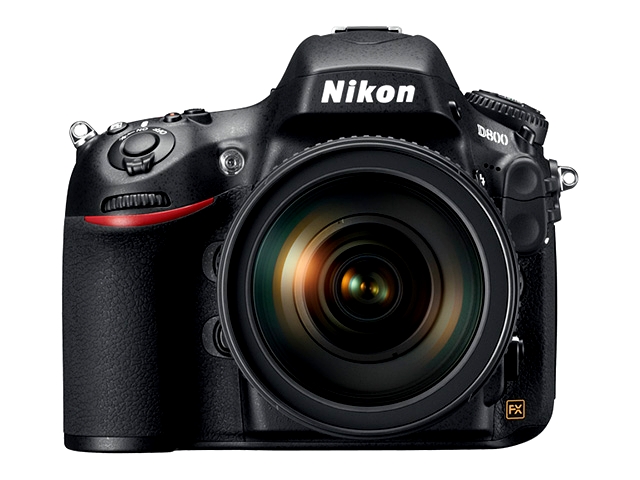
Nikon D800 Digital Photography Review

While there may be other current full-frame DSLRs to choose from, for many photographers the choice is going to be between only two of them; the D800 and new Canon EOS 5D Mark III, which was also launched in March. The earlier EOS 5D Mark II has been the benchmark camera in this class since it was introduced in 2008, with its 21.1-megapixel resolution easily trumping the excellent 12.1-megapixel Nikon D700 which had been launched a few months earlier. I'm going to be taking a look at the EOS 5D Mark III in a couple of weeks, but there are some comparisons we can make right away. For a start, Nikon has turned the tables on its rival, with the D800's awesome 36.3 megapixels resolution soundly beating the 5D Mark III's 22.3 megapixels. The most crucial comparison for most though will be the price; the 5D Mark III has an RRP of £2,999 body-only, while the D800 is priced at £2,599 body only, which is bound to be another big point in its favour.

Both the D800 and the EOS 5D Mark III are what are termed "compact" full-frame cameras, although they earn that name only in comparison to the massive behemoths that are the EOS-1D series and Nikon's own single-digit models, such as the D3X and the new D4. The D800 is a big camera by most other standards, measuring approximately 146 x 123 x 81.5mm, which is slightly larger than the D700, and a few millimetres narrower but taller and deeper than the EOS 5D Mark III at 152 x 116.4 x 76.4mm. The D800 is surprisingly light for such a big camera though, tipping the scales at 1,006g including battery and two memory cards, approximately 95g lighter than the D700 and 50g lighter than the EOS 5D Mark III.

Performance

For other improvements we have to move inside, where we find that the D800 has many components that it shares with the D4, including the new EXPEED 3 image processor. This is faster than previous versions, with 14-bit A/D conversion and 16-bit image processing, giving increased dynamic range in raw mode. It is also designed to deliver better video results too, with uncompressed HDMI video output and high quality audio output. I will admit to being no expert when it comes to video, but compared to other DSLR video that I've tried the results looked superb to me. It can shoot full 1,920 x 1,080 HD at 30, 25 and 24 fps, which I am assured is very useful for filmmakers, and has audio monitor output.

Also visiting from the D4 is the Multi-CAM3500FX 51-point AF system. It's an improved version of the AF system from the D700, which in my humble opinion has been the best AF system on any DSLR. This improved version is now even more sensitive in low light, going as low as -2EV, a whole stop lower than the D700. My opinion of it is unchanged; it's still the best AF system on the market. I shoot many gigs, often in very dark conditions, and I found that the D800 can focus on a stage back-lit by just two 40W bulbs. I could barely see the guitarist, but the D800 still produced a sharp picture. Another chunk of D4 is found in the 3D Colour Matrix III metering system, which is a fairly bonkers bit of kit. It features a 91,000-pixel RGB metering sensor, a massive boost from the 1,000-pixel sensor in the D700. It is apparently much better at scene recognition and has full-time face detection. The test of this is in the results, and I didn't find a lighting situation in which it failed to produce perfect exposures.

Features and Quality

The body of the D800 is made of magnesium alloy and is built for durability. It has the same body seals as the D700, protecting it from dust and moisture, and many of the FX-fitting lenses also have body seal gaskets. The body design is obviously derived from that of the D700, with many of the controls in the same position for the sake of familiarity, but the body shape is noticeably different, with a taller viewfinder turret and more sloping shoulders. Despite its size, the D800 is a very easy camera to handle, with all of the controls sensibly place and clearly labelled, although the changed AF controls are a bit fiddly to adjust. Like the D4 and D700, the viewfinder has a circular cushion and a manually activated blind. The video recording button is located above the shutter button, also like the D4, reflecting the increased importance Nikon has placed on the camera's video recording capabilities.

Listing all the D800's many features would take up more space than we have here, and is available on Nikon's site anyway. Instead, I'll just cover the major improvements over the D700, and since I already mentioned the viewfinder, I'll start there. The improvements are not just external; inside it's basically the same finder as the new D4, with a larger, brighter focussing screen, 100 per cent frame coverage and automatic crop lines for DX, 1.2x and 5:4 formats. As with the D700, DX cropping is optionally automatic if DX lenses are used, but the D800's massive sensor produces 15.3-megapixel images in this mode (compared to the D700's 5-megapixel ones). The D800 has a slightly larger monitor than the D700, an 8cm (3.2in) screen with 921,000 dot resolution and 170-degree viewing angle. It comes with a good heavy-duty clip-on screen protector as standard. Also new for this model is dual memory card format support. The D800 has two slots, one for CF cards, the other for SD. One nifty little improvement I noticed was perhaps the least significant, but I like the attention to detail. There's now a small white raised bead on the left of the body near the lens mount, which lines up with the white dot on the lens mount when fitting a lens. It's much easier to see than the small white dot on the mount ring itself, and makes changing lenses that little bit quicker.

Price : £2599 (body only)
europe-nikon.com

A photographer's Perspective with Nokia 808 PureView Review

While there's no question that the Nokia 808 PureView is technologically interesting and represents something of a breakthrough in photographic technology, at the end of the day it's still only a phone camera, just one with a larger than average sensor. Yes, the images can be amazingly detailed at full resolution, and yes the "oversampled" images do look nice at lower ISO settings, but the trade-off between resolution and photocell size really doesn't pay off as well as the hype would suggest, and as a camera it's handicapped by the usual phone camera problem; the lack of an optical zoom lens, a sluggish AF system that doesn't work well in low light, and inaccurate and unreliable exposure metering.

Most mobile phone cameras use extremely small sensors, usually 1/3.2in, or in real terms approximately 4.54 x 3.42mm, with a surface area of 15.5mm2. Most compact cameras use 1/2.3in sensors, which typically measure 6.17 x 4.55mm giving a surface area of 28.5mm2. Advanced compacts such as the Canon G12 use a 1/1.7in sensor measuring 7.44 x 5.58mm, an area of 43.4mm2. The Nokia 808 PureView uses an even larger sensor than that; it's a 1/1.2in chip measuring 10.67 x 8.00mm, with a surface area of 85.33mm2. In other words, its sensor has nearly double the surface area of an advanced compact, and over five times the surface area of a typical phone camera sensor. However it's still only about a quarter the size of an APS-C sensor (typically 370mm2), and less than one-seventeenth the size of the 40-megapixel sensor (44 x 33mm, 1452mm2) in the Pentax 645D, the only camera with a comparable resolution.

What this means of course is that the individual photocells are extremely small, in fact they're 1.4 microns, roughly the same pixel density as a compact camera with a 13-megapixel 1/2.3in sensor. In fact, if you think of the sensor as three 13-megapixel 1/2.3in sensors bolted together it makes a lot more sense. Unfortunately, such overpowered compacts are very prone to excessive image noise. Photocells that small are relatively poor at capturing light, especially when there's not a lot of light around to be captured, so they tend to produce very poor image quality in low light situations. To try and get around this the 808 camera combines the output of several photocells into one pixel, a technology which Nokia calls "Pixel Oversampling", but which regular readers will recognise as "pixel binning", a common high-ISO noise reduction technique used in cheaper compact cameras. From its 41MP sensor, it produces images of 8MP, 5MP or 3MP, depending on the quality setting, combining the output of different numbers of photocells into one pixel in the final image. But then the 808 can also produce full-resolution images of 38 megapixels in 4:3 aspect ratio, or 36MP in 16:9, which is quite a party trick, and we'll be taking a look at these later.

Another technological breakthrough that makes this larger sensor design possible is the 808's high quality Carl Zeiss lens, which was specially developed to match the sensor. Usually a larger sensor requires a greater distance between the lens and the sensor, which is why more advanced cameras are usually quite big. By using a non-zoom, fixed aperture lens designed specifically to match this sensor, the camera unit on the 808 is able to remain relatively small, although it does still make quite a bulge on the back of the phone. The lack of optical zoom is something of a limitation, but the 808 does offer a "lossless" digital zoom, adjusting the pixel oversampling to compensate for the cropping of the image and retaining much the same quality.In terms of image quality, it's a mixed bag too. Some people have been raving about it, but to be honest I wasn't all that impressed. One of the main claims is that it's supposedly noise-free, but this is simply not true. Sure, at the 50 ISO minimum sensitivity setting the image quality is undeniably very good, but noise starts to appear even at 100 ISO, and by the 1600 ISO maximum setting it performs no better than any mid-price compact camera. The level of detail at the full-resolution 38-megapixel setting (or 32 megapixels in 16:9 format) is undeniably impressive, showing up tiny details in the scene amazingly well. In my usual sample shot it could easily pick out wood grain from thirty feet away, at least in good light.

However that's not really the way the camera is intended to be used. It's at its best in the 8-megapixel PureView mode, using the pixel oversampling technology to its best effect. In this mode the colour rendition is very good, with bright vibrant hues in good light, and plenty of fine detail, but it's really still not any better than a good 8-10-megapixel compact camera. Like everything else in the known universe, the 808 can also shoot 1080p video, and it has to be said that the quality isn't bad, although again it bears the 'for a phone' caveat. It suffers from the usual CMOS sensor "Jello effect" if you pan too quickly, but it has that bright LED light for extra illumination, and the sound quality - mono only of course - is surprisingly good.

Price : £490
nokia.com

Sony NEX-7 24MP Camera Review, Specs and Price


The Alpha NEX-7 is the flagship of Sony's compact system camera range, and straight out of the gate, I have to say I love this camera. I've tried and reviewed maybe a dozen different CSCs over the past four years, but this is the first one I've seen that I would genuinely like to own, and I could see myself using it professionally. Unfortunately, I'll have to start saving up for it, because it isn't cheap. Even shopping around online the NEX-7 costs over £900 body-only, and if I want the 18-55mm f/3.5-5.6 kit lens as well, I'll need to find just shy of £1,000. It's not quite the most expensive CSC on the market; Fuji's gorgeous X-Pro-1 takes that honour at £1,300 body-only, but the NEX-7 isn't far behind. 
By way of a comparison, a Canon EOS 60D with an 18-105mm VR lens will set you back around £980.


At the core of the NEX-7 is an APS-C CMOS sensor with a maximum shooting resolution of 6,000 x 4,000 pixels, or 24-megapixels. This compares favourably with most of the top-end APS-C DSLRs; the Canon EOS 60D and 7D are 18MP, the Nikon D7000 is 16.2MP, as is the Pentax K-5 and new K-30. To find comparable resolutions you have to look to Sony's own range, with the new SLT-A65 and A77 offering the same 24MP sensor. As compact system cameras go, the NEX-7 is a fairly hefty beast, measuring 119.9 x 69.2 x 46.7mm and weighing 349g body only. By comparison, the Panasonic GX1 measures 116.3 x 67.8 x 39.4mm and weighs 318g, while the Olympus E-PL3 is 109.5 x 63.7 x 37.3 mm and 313g. It doesn't feel all that big though, and the square angular body looks slimmer than it really is. It's a very nice camera to handle, with a chunky front handgrip and a large sculpted thumb grip on the side and rear, making it easy to hold securely and operate with one hand. My only criticism of the handling is that there isn't much space between the handgrip and the lens barrel when using the kit 18-55mm lens.


The control layout of many CSCs is limited by their comparatively small size, which can make them fiddly and difficult to use, but Sony has overcome this limitation with a control interface for the NEX-7 that is, in my opinion, the best on any current CSC, and better than most DSLRs. The key to its success is the use of 'soft' controls that change their function depending on the shooting mode. There are two buttons to the right of the monitor and a pair of thumbwheels just above the thumb grip that, between them, are used to control or adjust every aspect of the camera's operation. The wheels are used to adjust exposure parameters and the buttons do multiple jobs, including menu button, focus mode selector, delete button and more. Even the rotary bezel around the D-pad is a 'soft' control, and is used to change shooting mode, make menu selections, and adjust some menu settings. The control layout is sensible and easy to remember, and even looks cool, with the dual adjustment wheels making a striking design motif.

Most CSCs have only live monitor view, but the NEX-7 also has an electronic viewfinder, and it's a really good one. It is proximity activated, so as soon as you put the camera up to your eye it switches automatically from monitor to viewfinder. The viewfinder screen is an OLED display with an amazing 2.4 million dot resolution, so high that individual pixels are invisible. It provides a nice big screen, and it's certainly sharp enough for manual focusing. The monitor is also very good; it has a 3in screen, and is partly articulated so it can tilt downwards by about 30 degrees or upwards by about 80 degrees, useful for waist-level or over-the-crowd shooting. With a resolution of 921k dots, the screen is extremely sharp and Sony's TruBlack technology gives it excellent contrast. It's also bright enough to use outdoors, although it does pick up finger marks very easily.

Sony NEX-7 24MP Camera Specifications :
  • Manufacturer and Model : Sony NEX-7
  • Image sensor : APS-C (23.5 x 15.6mm) CMOS
  • Max. resolution : 6,000 x 4,000, 24.3 megapixels
  • Shutter speeds : 30 sec - 1/4000th
  • Auto-Focus : Contrast detection, 25 points
  • Exposure control : P, A, S, M, intelligent auto, 8 scene modes
  • Exposure metering : 1200 zone evaluative
  • Image stabilisation : N/A
  • ISO range : 100 - 16,000
  • LCD monitor : 7.5cm (3in) 921,600 dots
  • Viewfinder : Electronic, 100% FOV, 1.09x mag
  • Flash : Pop-up, GN 6 (100 ISO)
  • Drive modes : Single, continuous, speed-priority continuous
  • Image formats : JPEG, Raw
  • Video : 1,920 x 1,080 (50p, 28M, PS) AVCHD or MP4
  • Memory card slot : SD/SDHC/SDXC
  • Battery : 1080mAh InfoLithium
  • Ports : HDMI, USB 2.0, Mic-in
  • Dimensions (W x H x D) : 119.9 x 69.2 x 46.7mm
  • Weight (body only) : 349g body-only
  • Accessories : Body cap, neck strap, battery charger
  • Software : Sony Alpha NEX software disk
  • Warranty : 12 months

Of course, it's all very well having a slick design and a nice viewfinder, but what photography enthusiasts are looking for is performance and results. In terms of overall performance, it is comparable with a good pro-sumer DSLR. It can start up and take a picture in about 1.5 seconds and in single-shot JPEG Fine mode, it has a shot-to-shot time of approximately 0.7 seconds, which is impressive enough by most standards. In Raw + JPEG mode it is a little slower; it can shoot the first six frames at the same speed, but then slows down considerably, with a shot-to-shot time dropping to over two seconds. There are two continuous shooting modes: one that shoots at 3fps which, in JPEG mode, can keep shooting until the card is full, and the other that shoots at an impressive 10fps, but which has to pause after 18 frames. Again, both of these modes are more limited in raw mode, due to the much larger files that are being moved around. Raw files are approximately 24MB in size, but the size of the JPEG files varies more than any other camera I can think of, with file sizes ranging from around 4MB up to 12MB.

The NEX-7's real party piece, though, is its low-light performance, and this is what really sells the camera for me. I do a lot of live music photography and I think it's safe to say I've never seen a camera that performs better in this role. Although it uses contrast detection autofocus - like all CSCs do - it's just as fast and reliable as any phase-detection system and works extremely well in low light. However, it is the high-ISO performance that really stands out. The NEX-7 has a maximum ISO setting of 16000, which is the highest of any digital camera I've ever used, and astonishingly it can produce useable image even at this setting.

Price : £924 (body-only)


Samsung NX200 Camera with 3in AMOLED Monitor Review

Samsung's it is one of the most successful and prolific camera manufacturers, with a range of over two dozen compact cameras, a dozen or so video camcorders and its highly regarded series of compact system cameras (CSC), the NX System, in which it currently fields six models. Samsung NX200 is a second-generation model in the NX series, following on from the popular NX100 which was launched in 2010. Samsung surprised a lot of people by opting to use a full-sized APS-C sensor in its CSC range, and the NX200 is equipped with a 20.3-megapixel CMOS imaging sensor measuring 23.5 x 15.7mm, giving it one of the highest resolutions of any current CSC camera and easily beating rival models such as the Panasonic GX1 (16-megapixel), the Olympus Pen E-P3 (12.3-megapixel), the Pentax K-01 (16.3-megapixel) and the Nikon 1 J1 (10.1-megapixel), which I reviewed a few weeks ago. Only the flagship model of Sony's CSC range, the NEX-7, has a higher resolution at 24.3-megapixel, but that's nearly twice the price. Not that the NX200 is a particularly cheap camera; at £549, including the kit 20-50mm lens seen here, it is one of the more expensive CSCs on the market, costing more than the Pentax Q (£349), the Nikon 1 J1 (£375), the Panasonic GF5 (£500) and the Sony NEX-5 (£530), but it is cheaper than the Nikon 1 V1 (£630), the Olympus E-P3 (£640) and the Pentax K-01 (£680).

The NX200 features a 3in AMOLED monitor with a resolution of 614,000 dots. It's exceptionally sharp but rather disappointingly it's a little too dim to be viewed in direct sunlight. It's worth noting also that the NX200 has no built-in flash, although it does have a hot-shoe that will accept any external flashgun, and a small folding flashgun is available as part of the NX range. Some CSCs have simple controls like those of a compact camera, but the NX200 offers a greater level of complexity, approaching that of a mid-range DSLR. It has a mode dial recessed into the top panel with a full range of automatic and manual exposure options, including scene modes, a sweep panorama feature, digital filter effects and 'Magic Frame' mode, which composites a variety of novelty frames onto your photo.


The NX200 offers a very wide range of exposure control, with shutter speeds of 30 seconds to 1/4000th of a second, and the 20-50mm kit lens has a minimum aperture of f/22 and a maximum of f/3.5-5.6. Further versatility is added by the Picture Wizard function, which offers a range of customisable pre-sets for picture tone. Like all the best cameras, the NX200 offers several different ways to accomplish the same thing, so you can tailor the way you use the camera to your own preference.The NX200's overall performance is good, although there are a few issues. In its default setup, the camera will run a quick sensor-cleaning routine on start-up, which takes a couple of seconds. It's a good idea and helps keep dust off the sensor, but it can be annoying if you're trying to snap something in a hurry. Fortunately this feature can be turned off in the menu, in which case the camera can start up and take a picture in well under two seconds. In single-shot mode its shot-to-shot time is approximately 1.3 seconds, which is slower than I was expecting, mostly due to the slightly sluggish AF system. It has two continuous shooting modes, a low speed at 3fps which appears to be able to run for several dozen shots, and a high-speed 7fps mode, which shoots for seven frames but then locks the camera up for 12 seconds while it writes to the memory card. The only major problem I found with the camera's performance was in raw mode, where after just a few shots the camera would lock up for up to nine seconds, displaying a "processing..." notice on the monitor. Since menu or playback functions cannot be used while this is going on, it makes the camera frustrating to use in this mode.

Battery duration is about average for the class. It is powered by a 1,030mAh li-ion rechargeable which Samsung claims is good for 320 shots. I took about 250 shots plus some video clips while testing and the battery indicator was still showing two out of three bars, so that may be a bit on the conservative side.


Colour reproduction and dynamic range earn a special mention; both are exceptionally good, and will come as a major revelation to anyone expecting this camera to perform like a compact. The Schneider Kreuznach kit lens is also above reproach, producing pin-sharp detail right across the frame, with no corner blurring, optical distortion or chromatic aberration. If only all kit lenses were this good!

This review wouldn't be complete without a brief mention of the video recording mode; the NX can record in full HD 1,920 x 1,080 resolution at 30fps with stereo audio recorded via a pair of microphones on the top plate. Video quality is very good, as one might expect, although the audio quality is a bit tinny and the automatic level control goes bananas if you try to record loud music. The microphones are also very susceptible to wind noise, turning a slight breeze into a loud whistling sound. Manual zoom can of course be used while recording, and video files are recorded in H.264 format.

Price : £549.00 with kit 20-50mm lens

Samsung WB750 Cameras Review, Specs and Price


Samsung WB750, a 12.5-megapixel compact camera featuring an 18x zoom Schneider-Kreuznach lens and full HD video recording, which is currently available from high street retailers for less than £160. In many ways, the WB750 is the camera that the Optio VS20 would have liked to have been.

Samsung WB750 Cameras Specification :
  • Manufacturer : Samsung
  • Model : WB750
  • Image sensor : 12.5MP BSI CMOS, 1/2.3in
  • Max resolution : 4096 x 3072
  • Zoom : 18x optical, 4x digital
  • Focal Leght(35mm) : 4-72mm (24 - 432mm equiv)
  • Max aperture : f/3.2 - f/5.8
  • Shutter speeds : 16 - 1/200th sec
  • Auto-focus : N/A
  • Exposure control : Auto,P,A,S,M Scene modes
  • Exposure metering : Multi / Spot / Centre Weighted / Face Detection AE
  • Image Stabilisation : Dual IS, optical and Digital
  • Iso Range : 100 - 3200
  • LCD Monitor : 7.62cm (3in) 460,000 dots
  • Viewfinder : N/A
  • Flash : Max range 3.5m, 11sec recharge time
  • Driver model : Single, 8-frame burst3,5 and 10fps
  • Image Formats : JPEG
  • Video : Full HD 1080p, 30fps, stereo audio,20 min lenght
  • Memory card slot : SD/SDHc/SDXC
  • Supplied Memory : 8.3MB internal
  • Battery : 1030mAh li-on rechargeble, approx 300 Shoot
  • Ports : Micro USB2.0,HDMI type D
  • Dimensions (W x H x D ) : 105 x 61 x 33mm
  • Weight : 218g inc. batteryand card
  • Accesories : Wrist strap, Charger, software CD
  • Software : None supplied
  • Warranty : 12 months
Price : £160

Like most distinct types of camera, long-zoom compacts have evolved a standard set of design features over several generations, and the WB750 ticks all of the boxes. Physically, it's close to average for the breed, measuring 105 x 61 x 33mm closed, or 75.6mm deep with the lens fully extended, which is approximately the same size as the Optio VS20 and also the class-leading Panasonic TZ30. It weighs 218g including battery and card, which is a little heavier than the TZ30 and about 15 per cent heavier than the VS20.

The shape incorporates a small but functional handgrip, covered with a textured plastic surface, with the flash built into the front panel just far enough away from the grip to avoid knuckle shadows (Pentax please note). Like most travel cameras, the lens retracts into a bezel that stands about 8mm proud of the body line. The edges are bevelled (a bevelled bezel!) so it slips into your pocket quite easily and as usual, the lens has an automatic cover.

The overall design of the WB750 is rather utilitarian, with no decorative frills or flourishes, and it is available only in black. The body is half metal, half plastic, and the build quality is adequate, although it does creak a little if given a good squeeze. The control layout is sensible, with a main mode dial prominently positioned on the top panel, and a D-pad with a rotary bezel on the back surrounded by four well spaced-out single-function buttons. The labels on the buttons are grey rather than white, which on the black background makes them a little hard to see in low light, but they're fairly easy to remember so this isn't a major problem. I'm not usually a fan of rotary bezel controls, but the one on the WB750 is actually very good. It is just stiff enough to resist accidental jogs, while still being easy to use.

As you might expect from the world's largest manufacturer of flat-panel displays the monitor is very good, a 3in screen with a 460k dot resolution and a glare-reducing surface. It is very sharp and bright enough to use even in bright sunlight, and the viewing angle is excellent in all directions except, rather annoyingly, downwards, where the colours invert beyond about 45 degrees. The menu system is very well designed, with a nice clear high-definition font and full colour pictorial icons. Most of the camera's functions can be accessed very quickly via the "Fn" button menu, and changing settings is refreshingly easy.

Despite its relatively low price the WB750 isn't short on features. It has multiple exposure modes, including aperture and shutter priority and full manual exposure, which is a rarity on a camera in this class. It also has a range of automatic scene modes, including HDR capture and a 3D mode that apparently synthesises a stereoscopic image from a single frame, but you need an expensive Samsung 3D TV to view the results. Other creative features include spot, multi-zone and centre-weighted metering, single-point, multi-point and tracking AF, and a range of creative filter options.

The WB750's overall performance is also much better than one might expect for the price. It can start up and take a picture in under three seconds, and in single-shot mode, the shot-to-shot time is approximately 1.8 seconds, which is pretty quick. It has no continuous drive mode as such, but it does have several burst shooting modes, which can shoot eight frames at 10, 5 and 3fps. It also has a "precapture" mode that shoots a continuous buffer of eight frames between a half-press and a full-press of the shutter button, so you won't miss a vital moment due to slow reflexes. It also has a multi-function bracketing option, which takes three photos with different brightness, style and white balance settings, although a simple exposure bracket might have been more useful.

The autofocus system isn't the fastest I've ever seen, but it is at least consistent. It takes approximately one second to focus at all focal lengths and in virtually all lighting conditions. It does stumble occasionally in very low light, but it has a bright amber AF assist lamp with a range of about two and a half meters, so it can focus in complete darkness at close range. At least if it can't focus it has the courtesy to let you know immediately rather than hunting around for several seconds.

Battery life is often a problem on long-zoom compacts, but not so for the WB750. It is powered by a fairly beefy 1,030mAh li-ion rechargeable, which is more powerful than most of its rivals. Over the course of a week, I took about 200 test shots starting from a full charge, as well as some video and a number of flash shots, and it was still showing one bar out of three on the level indicator at the end. I'd estimate the duration to be around 300 shots.

The WB750 is the latest camera to forego the trend towards ever-increasing sensor resolution, and is instead equipped with a 1/2.3in 12.5-megapixel back-side illuminated (BSI) CMOS sensor. Back-side illumination is supposed to improve low-light performance and reduce noise at higher ISO settings by increasing the amount of light getting to the photocells, and in this case it does seem to work. Although there is some slight colour mottling even at 100 ISO, the WB750 produces usable images at 1,600 ISO, and even the maximum 3,200 ISO setting isn't completely terrible. Samsung has wisely avoided the temptation to add extended pixel-binned higher ISO settings.

The WB750 is a true jack of all trades, although it is master of none. It has good overall handling and performance, still image and video recording quality is good enough for most purposes, and the addition of manual exposure modes and other creative features gives it some welcome versatility. While it's a bit dull to look at, it's a pleasantly easy camera to use and an excellent all-rounder. It's also good value.

Samsung uk

TrekPod Go! Pro Specs, Price and Review


TrekPod Go! Pro Specification : 
  • Model : TrekPod Go! Pro
  • Max. load : approx. 6kg
  • Max. Height : 163cm
  • Min. Height : 99cm
  • Packed Size : 58.4 x 10.2 x 6.3 cm
  • Weight : 794g
  • Accessories : Carrying bag, mag mount

Price : £114

By far the quickest, easiest and cheapest way to improve the quality of your photographs is to start using a tripod. Camera shake ruins more pictures than any other single factor, and a decent tripod can eliminate it. However, unless you can afford the latest lightweight carbon-fibre technology, tripods tend to be heavy and awkward to carry, especially if you're lugging your camera gear into the great outdoors, so most amateur photographers tend to leave them at home.

If you need to travel light, then a monopod is a good alternative to a tripod. Obviously, it doesn't provide the same free-standing support, but any help is better than no help at all, and a monopod will greatly reduce the incidence of camera shake.


Many serious hikers like to carry walking poles; lightweight walking sticks similar to ski-poles, which help with balance on rough or steep ground. A Colorado-based company called Trek-Tech has spotted the similarity between a walking pole and a monopod, and has rather cunningly combined the two ideas into something it calls the TrekPod. It produces several variations on the design, but today we're looking at the latest model, the TrekPod Go! Pro.

Design
The TrekPod is far from being a simple walking stick. It is a surprisingly complex device, consisting of four main sections that slot together. The top section features Trek-Tech's patented MagMount ball-and-socket head, the middle two sections telescope together to provide a degree of height adjustment, while the bottom section contains the TrekPod's cleverest feature. It consists of three slender 43cm-long legs that splay out to form a tripod, enabling the TrekPod to stand unsupported. When stowed, the legs are secured by a strap of some new high-tech Velcro-like material.

The device comes disassembled in a nylon carry bag, with sleeves for the tube sections and a mesh pocket for the head attachments.

The TrekPod Go! Pro has two extending sections, giving it a maximum height of 163cm as a monopod, or 152cm with the legs splayed, and a minimum height of 11cm or 100cm with the legs splayed. By comparison, a typical four-section monopod might have a maximum height of around 160cm and a minimum folded length of around 55cm.

The main components of the TrekPod are made from aluminium to save weight, but the heaviest component is the tripod leg section, which accounts for over 300g of its 794g total weight. This makes the TrekPod very heavy compared to normal walking poles, which typically weigh around 300-350g, and much heavier than most conventional monopods (or should that be monopodia?); a typical four-section aluminium monopod will weigh in at around 400g.


Build quality
The overall build quality of the TrekPod is reasonable, but not really up to the standard of some of the better-known tripod brands. The black paint finish on my review sample showed a number of scratches after just a couple of days of very light use. Give it a few days hiking in rough country and it could end up looking decidedly battered.

The twist-lock rings between the telescoping sections need a great deal of pressure to achieve any sort of rigidity, and the threaded aluminium collar that holds the leg section in place feels quite fragile, especially considering that it's a vital component in a vulnerable position. It's also worth noting that aluminium is quite a soft metal. If sand gets into the threads it could quickly cause a lot of wear.

The clever bit of the TrekPod is its ball-and-socket head, which features a magnetic fastening to hold the camera on to the top of the pod. The TrekPod comes with two steel mounting disks, either of which can be attached to your camera's tripod bush. One is a simple round design that can be tightened by finger pressure or with the edge of a coin. The other has toothed crenulations that engage with matching teeth on the tripod head, and are designed to support a heavier camera. This plate is meant to be tightened up with an Allen key wrench, which is supplied.

The top of the head has a powerful neodymium magnet embedded in it, which is strong enough to hold a compact camera in place by itself, but for additional security the head has a locking latch. The ball-and-socket part of the head is of reasonable quality; not up to that of the premium brands but better than most budget monopods.


In the field

In actual use, the TrekPod performs fairly well, in as much as it provides some extra shooting support. As a monopod, the head is strong enough to support a large compact or super-zoom camera, and maybe even a compact system camera (CSC), a video camcorder or compact DSLR if you're careful.

As a tripod, however, it isn't as useful as one might hope. For a start, it can only be used on completely level ground; a slope of only a couple of inches is enough to topple it over. I also wouldn't recommend using it unsupported on a windy day or with anything heavier than a large compact on top. The spread of the legs is only 50cm, less than a third of the maximum height, which doesn't give it much stability.

The TrekPod Go! Pro is currently selling for around £114, which is a bit steep considering a good quality aluminium monopod will usually cost between £40 and £50, and you can pick up a decent carbon-fibre one, which is less than half the weight of the TrekPod, for less than £100. It's also worth noting that many current monopods can also double as hiking poles, with interchangeable feet including spikes and snow-rings.


Although the TrekPod Go! Pro is certainly an interesting gadget, and the unique MagMount head works very well, it's hard to see that it offers any concrete advantage over a conventional monopod, and indeed there are several disadvantages; it's considerably heavier, a lot more expensive and the build quality simply isn't good enough to stand up to regular use in any sort of rough terrain. The paint finish scratches too easily and the aluminium parts simply aren't strong enough to resist sand abrasion or survive being bumped against rocks.


Nikon 1 J1 Double Zoom Kit Specs, Review and Price


Since the introduction of the Olympus Pen E-P1 and Panasonic DMC-GF1 in 2009, which are generally recognised as the first examples of the type, the Compact System Camera or CSC has taken off in a big way. Samsung, Sony, Pentax, Fujifilm and Nikon have all jumped on the mirrorless interchangeable lens bandwagon, leaving Canon as the only major DSLR manufacturer not fielding a CSC as part of its current model range, although rumour is rife that Canon too will launch a CSC some time in 2012. They'll have some catching up to do, because arch-rival Nikon launched its "Nikon 1" mirrorless system in September last year with two models, the expensive but sophisticated V1 with its electronic viewfinder, and the cheaper and simpler J1, which I'm taking a look at today.

There are almost as many approaches to CSC design as there are camera companies making them. Panasonic and Olympus have both opted for the Micro Four-Thirds sensor and mount system; Sony, Samsung and Fujifilm have all developed new lens mounts but have opted for the well established APS-C sensor format, while Pentax has hedged its bets with the tiny compact-sized Q system as well as the K-01 with its APS-C sensor. Nikon has taken another approach altogether, developing an entirely new lens mount and a new size of sensor, which it's calling the CX format.


The CX sensor is considerably smaller than those used by most of its rivals. It measures 13.2 x 8.8mm, giving it a little over half the surface area of a Four-Thirds sensor (17.3 x 13.0mm), and less than a third of the area of a typical APC-C sensor (23.7 x 15.7mm). From an enthusiast's point of view this is slightly disappointing, since a smaller sensor will inevitably mean a risk of noise at higher resolutions, but since both the V1 and J1 have a resolution of only 10.1 megapixels this may not be too much of a problem, as we'll see later.

One advantage of the smaller sensor size is the correspondingly smaller sizes of the required lenses, which have a crop conversion factor of approximately 2.7x, compared to the 2x crop of the Four-Thirds format. The Nikon 1 system currently has only four lenses available, although more are planned. There are the two zoom lenses seen here, a 10-30mm f/3.5-5.6 wide-zoom roughly equivalent to 28-80mm, and a 30-110mm f/3.8-5.6 telephoto zoom, equivalent to 80-300mm. There is also 10mm f/2.8 prime lens, and a 10-100mm f/4.5-5.6 powered zoom designed primarily for video recording.


The lenses are very small compared to APS-C optics, but compared to the Micro Four-Thirds lenses produced by Olympus and Panasonic the size difference isn't all that great. The Nikon 10-30mm is 57mm in diameter, 41mm long and weighs 114g, while the 30-100mm is 59.4mm diameter, 61mm long and weighs 177g. By comparison the Olympus 14-42mm lens for the Pen system has a 56.5mm diameter, is 50mm long and weighs 113g, while the 40-150mm has a 63.5mm diameter, is 83mm long and weighs 190g. Panasonic has recently introduced a 14-42mm Four-Thirds lens that is even smaller than Nikon's 10-30mm.

Both the Nikon 1 zooms have a folding design; you have to press a button on the barrel and twist the zoom ring to extend the lens into shooting position before a picture can be taken. This action also switches the camera on, which saves a little time, but it is still a bit fiddly at first. The lenses are fitted via a conventional bayonet mount, with a prominent silver ridge on the barrel to help align the lens when attaching it.


In terms of overall design the J1 owes more to compact cameras than to DSLRs, particularly some of the old Samsung NV compacts from 2006-2007. This isn't bad news though; those were some good-looking cameras. Of its current rivals the one that it most closely matches in both style and size is the Olympus E-PM1. The J1 has a largely plastic body, although it has Nikon's usual exemplary build quality, with tight panel seams and no embarrassing creaks when squeezed. The body is designed more for aesthetics than handling, and the round-ended shape is difficult to hold comfortably and securely. There is a small textured area on the back for your thumb, but nothing on the front to provide purchase for the fingers.

From the front the camera has a very clean and elegant look, with a flat and relatively featureless fascia, along with simple rounded ends and a flat top plate. Turn the camera round though and you'll see that this is somewhat illusory; the rear panel is a lot more businesslike, with a mode dial, D-pad and a selection of buttons.


Users hoping for a DSLR-like level of control will be disappointed; the control layout is relatively sparse, bearing more resemblance to that of a mid-range compact. It has a mode dial, but rather than the range of exposure mode options one might expect it has only four settings; video recording, still shooting, still shooting in automatic scene selection mode, and "motion snapshot", which records a brief video clip with accompanying cheesy background music. The other main external control is a D-pad with a rather loose and fiddly rotating bezel.

The secondary controls on the D-pad are an odd bunch too. Self-timer, flash mode and exposure compensation are common enough, but for some reason the AF lock and AE lock are also found on the D-pad. The camera has an "F" button positioned conveniently for the right thumb, where one would expect to find the AE-L and AF-L functions, but in still shooting mode this button is used for the continuous shooting modes.


The exposure modes, which for any enthusiast will be among the most often-used functions, are relegated to a menu option, and when you do select either aperture or shutter priority, the exposure adjustment is made not with the rotary control that is used to adjust everything else, but with the small and fiddly zoom control lever. It is so awkward and unintuitive it's hard to believe that a camera company as experienced as Nikon could come up with it.

These design foibles are doubly annoying because if you can battle your way past the terrible control interface you'll find that the J1 is actually a very capable camera. Despite the small size of the lenses they offer a maximum aperture of f/16, and the shutter speeds available range from 30 seconds plus B to an incredible 1/16,000th of a second, thanks to an innovative electronic shutter. This shutter also gives the J1 the ability to shoot burst of stills at full resolution at up to 60fps. The camera is well equipped for low-light shooting too, with a maximum ISO setting of 6400. The menu offers a wide range of picture customisation, with seven Picture Control presets, each one customisable with up to five steps of adjustment for sharpness, contrast, brightness, saturation and hue. Custom Picture Control settings can be saved to the memory card.


Any design problems that the J1 suffers can largely be forgiven in the light of the camera's main selling point, which is its lightning-quick hybrid adaptive autofocus system. Nikon has always led the field in AF development, but even so it can be justifiably proud of this one. Most CSCs use contrast-detection AF, which is slow and doesn't work well with moving subjects, while DSLRs use the faster phase detection AF system. The J1 (and the V1) has both, switching between the two as circumstances dictate, and as a result it can focus quickly and accurately on any subject in almost any lighting conditions. I tested it extensively with outdoor sports, indoor live music and a range of other situations, and it coped brilliantly every time, never producing an out-of-focus shot. It is without doubt one of the best AF systems I've used, topped only by Nikon's own high-end DSLRs.

Apart from the slow and fiddly business of extending the lens the camera's performance is very good. In continuous shooting mode it can maintain 10fps with continuous focus for 70 frames, although even with a fast card it does take nearly two minutes to fully empty the buffer. Focus tracking works extremely well even at the extreme end of the telephoto range.


The main reason for buying a CSC instead of an advanced compact is better image quality, and in most respects the J1 delivers the goods. Colour rendition is excellent, especially in raw mode where the extra depth really helps. Dynamic range is fairly good for a smaller sensor, but even with the Active D-Lighting feature the shadows and highlights could be better.  Despite having only 10.1-megapixels of resolution the J1 captures a very high level of detail, and the JPEG fine image mode has very low compression, producing image files averaging around 6MB.

The optical quality of both the kit lenses is generally good, capturing plenty of sharp detail with good contrast. Centre sharpness is excellent, although the 10-30mm lens does suffer from slight softness and a little chromatic aberration toward the corners of the frame, but I've seen worse from some full-size DSLR lenses.


One image quality highlight is the high-ISO noise control, although it is not without a small caveat. In JPEG mode the high-ISO noise reduction is very heavy handed, producing an effect like a badly applied clone brush. By shooting in raw mode, or shooting with high-ISO noise reduction switched off, and then applying noise reduction in Adobe Camera Raw the results are much better, producing usable images even at 6400 ISO. For more details you can see details of the image below


Nikon 1 J1 Double Zoom Kit Specification :


Price : £495

[ Nikon ]


For a first-generation model, the J1 has a lot to commend it, not least its attractive and stylish design and outstanding autofocus system, but it is also beset by several problems. The handling is awkward, and the control interface does its best to conceal what is actually a versatile camera. It's not the best CSC on the market, nor the cheapest, but it is capable of delivering reliably good results.